 |
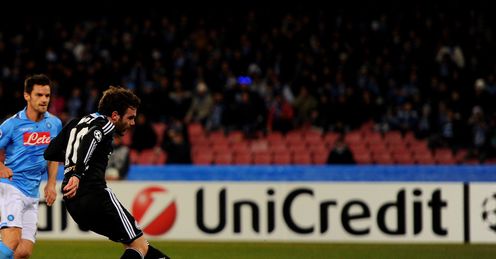
| Juan Mata bags Chelsea's away goal in Naples. |
That said, it led me to question whether the away goals rule is actually an effective one. Years ago, before I started watching football, the rule was introduced, to encourage sides to go forward away from home in Europe. Teams regularly went away from home in European competitions over two-legs and 'parked the team bus' to coin a phrase from Mr Mourinho. If you went away from home, you were delighted to go into the second leg on the back of a boring 0-0. So the rule was introduced, to give you an advantage if the game ends in a draw but you've scored more away goals. A good introduction on the face of things...or so you'd think.
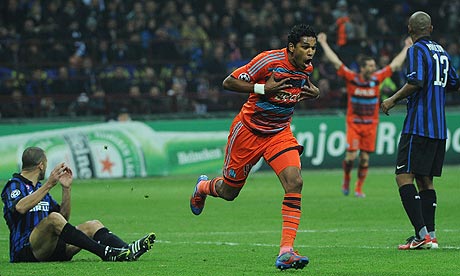 |
| Marseille's away goal takes them through in the San Siro last night. |
What's happened though, is a role reversal, although tonight's game isn't a great example with both home teams winning the game comfortably. Many teams are cautious at home, being wary of conceding that vital away goal. It's up to the home side in the first leg to back themselves and try and win the game, but only if you are 100% confident you are better than the opposition or the opposition play poorly on your patch, can you take the chances and go forward.
Would it make a different if the rule was scrapped? Would the shift go back to defensive away sides rather than home sides? Does the psychological advantage of having to have a go at home make the rule worthwhile? Is there a way to make sure neither side is edging on the side of cautiousness in a two legged tie? Probably not. There is always going to be an advantage which ever way it works. I think I'm just verging on the side of it being a rule which works, but should NOT count after extra time as 120 minutes vs 90 to get an away goal, is simply unfair.

No comments:
Post a Comment